
It’s that time of year again, when we take a little time to slow down and for me that always involves delving into a good book (or two). So below is what will be keeping me occupied this sunny season, hope it inspires. Happy Summer all!
The year of magical thinking by Joan Didion (2005)
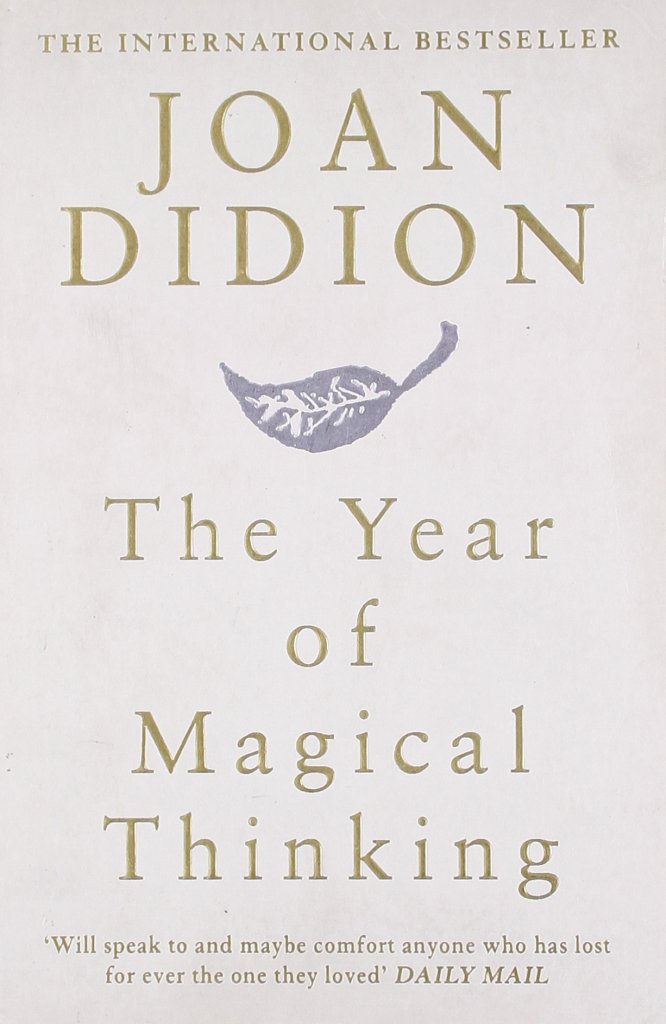
This is one of my go-to books about grief. Written by the extremely talented Joan Didion about her unfathomable experience of her husband dying very suddenly while her daughter lies seriously ill in hospital. This book precedes Blue Nights, an equally devastating book about the eventual death of her daughter, two years after her husband.
I can turn to any page and find something both beautiful and devastating. As with other writers, she speaks of the differences between grief and mourning, describing grief as the passive first act, and the mourning which follows requires attention.
We as therapists use the term “magical thinking” to describe a stage in a child’s development where they believe they have omnipotent control over their environment. The child cries and a parent rushes in to sooth and attend, (i.e. the child believes they have control over their caregivers). Didion uses the term to describe the year after her husband of 40 years dies where she wishes for his return and struggles to accept her new reality.
She writes beautifully, once describing how she had mindlessly turned the open pages of her husband’s dictionary whilst on the phone, and suddenly realised she had lost where his last word search would have been. She writes “ …when we mourn our losses, we also mourn, for better or for worse, ourselves. As we were. As we are no longer.”
Bittersweet by Susan Cain (2022)
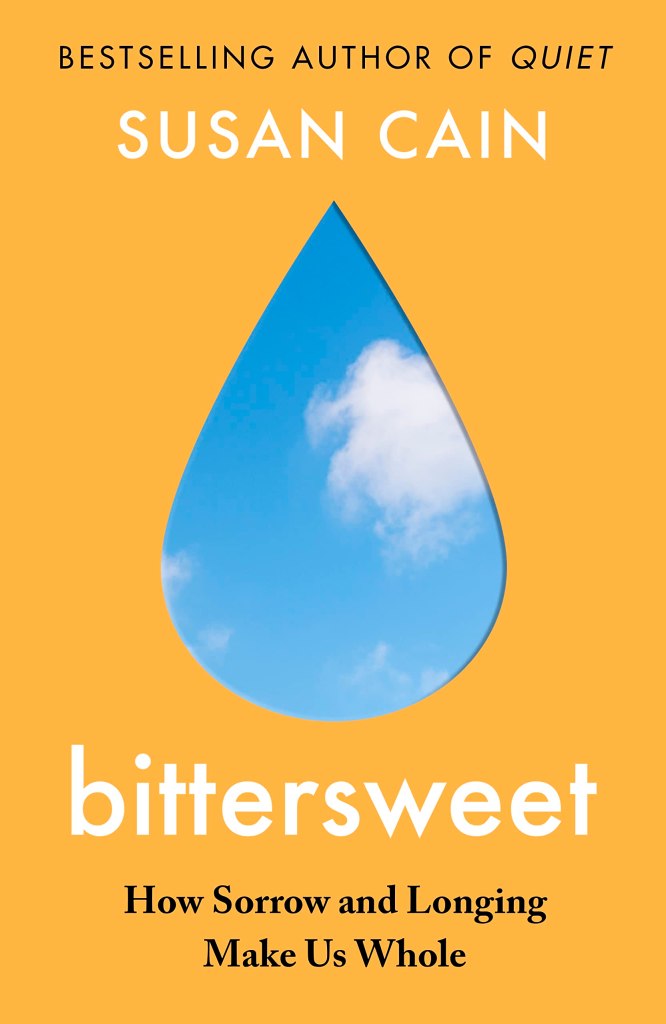
Ten or so years ago American write, Susan Cain wrote “Quiet: the power of introverts in a world that can’t stop talking.” In fact, her first three books were all related to the notion of introversion. Now she moves on to tackle the experience of the bittersweet. There is even a short quiz to take in the introduction to assess our levels of bittersweet (turns out I am unsurprisingly “a true connoisseur of the place where light and dark meet”).
Susan uses real life experiences and interviews and other forms of research to support her notion that “bittersweetness shows us how to respond to pain…transforming pain into creativity, transcendence, and love.”
Her starting point is understanding why we like sad music so much, focusing on her love of Leonard Cohen’s songs. She then embarks on a journey connecting sadness with creativity, and debating why western societies hide their authentic sorrows in favour of fake smiles and positivity.
Susan even delves into our mortality and asks how we should live knowing that we and others will die one day. Fascinating as this existential topic is, it did feel a bit of a detour to me, but maybe we can’t talk about the bittersweet without talking about death.
One aspect which I really enjoyed was Susan’s honesty about her personal experiences. She described her difficult relationship with her anxious mother and her golden Freudian slip when, as a student, she accidentally handed her mother her personal journals causing their relationship to fracture. The bittersweet aspect is her mother, now in a care home suffering with dementia, has forgotten their past conflict and receives her daughter with love and not a hint of rancour. She weaves her personal story throughout her chapters, allowing her research into all things bittersweet, to change her perspective of her life and close relationships.
The entire cover of this hard copy book is a bright blue sky peppered with white fluffy clouds, something which caught my eye in my local bookstore. A bit like the surround, this book is attractive and interesting, but I yearned for a little bit more practical grounding rather than just staying in the clouds. An enjoyable read nonetheless on a little-known emotional state.
Good Girls. A story and study of anorexia by Hadley Freeman (2023)
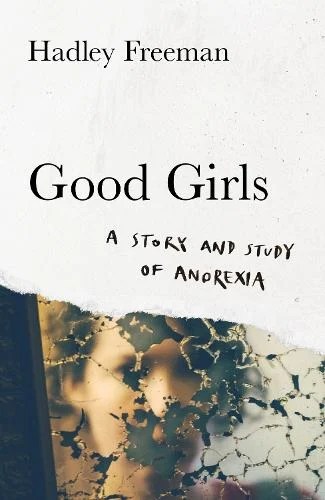
I was very much looking forward to reading journalist and writer, Hadley Freeman’s deeply personal memoir about her experience of anorexia as a teenager and I was not disappointed. Hadley expertly interweaves her experience of this incredibly tough mental illness, with the stories of others she met along the way, as well as shedding some much needed light around the condition and why it happens.
I was invited into Hadley’s private universe as a 14-year-old, feeling completely overwhelmed with life, anxious, a people pleaser and about to face puberty. Her private thoughts include the emergence of a new inner voice (the eating disorder) which eventually takes a grip causing her to be hospitalised numerous times. Hadley includes a discussion around anger and her illness, for her “anorexia was an excuse to be angry” in contrast to the perfect, problem-free daughter she was trying to be for her parents. She got to use her illness as an excuse for “bad” behaviour.
Hadley writes of the moment when “a gasp of air” led to her recovery (the trigger was waking up in hospital to the scene of an adult woman having a tantrum over a piece of toast). She speaks honestly about her struggles as a young adult, attempting to fast track her adulthood at university using sex and then turning to drugs to “break away from the still anxious little anorexic”.
She writes of her wishes for our society and the way young girls and women are treated. “I wish we were better at explaining to girls what growing up involves…I wish we would tell girls that their bodies are not an outward show of who they are…and most of all, I wish we, the grown women, were better at believing all this ourselves.” (here here Hadley)!
Enchantment by Katherine May (2023)
Katherine sets out in this book to “reawaken wonder in exhausted age”. This quest appealed to me deeply as I often struggle to discover such moments in my life despite knowing how restorative they can be. Katherine describes us as “… the deep bone-tired of people who no longer feel at home…meanwhile, at the edge of consciousness, we sense a kind of absence.” This absence is the place where wonder inhabits.

She described how as children; enchantment seems to come easy but as we grow into adults we lose this capacity. She describes her longing for wonder as “…the chance to merge into the wild drift of the world, to feel overcome, to enter into its weft so completely that sometimes I can forget myself.”
I really enjoyed Katherine’s writing style, it’s impactful and beautiful and deeply profound at times. The book is organised via the elements; earth, water, fire and air (the elemental model is often used in therapy for qualities of personality as well as the alchemical process of transformation).
While reading this book, I was participating in a course regarding active hope in regard to climate change and found that both pieces sang in unison at times. Katherine advocates for us to return to a deeper connection with our environment and to “enter into a conversation with our places that is mutually nourishing.”
The book is a personal exploration and Katherine is vulnerable and honest throughout. I felt inspired and awakened by the end of this book. The search for enchantment felt in reach and possible. So, thank you Katherine for sharing your experience so others can follow.
Photo by Ethan Robertson on Unsplash
 Suzie Chick
Leave a comment