“When you do nothing, you feel overwhelmed and powerless. But when you get involved, you feel the sense of hope and accomplishment that comes from knowing you are working to make things better.” Maya Angelou
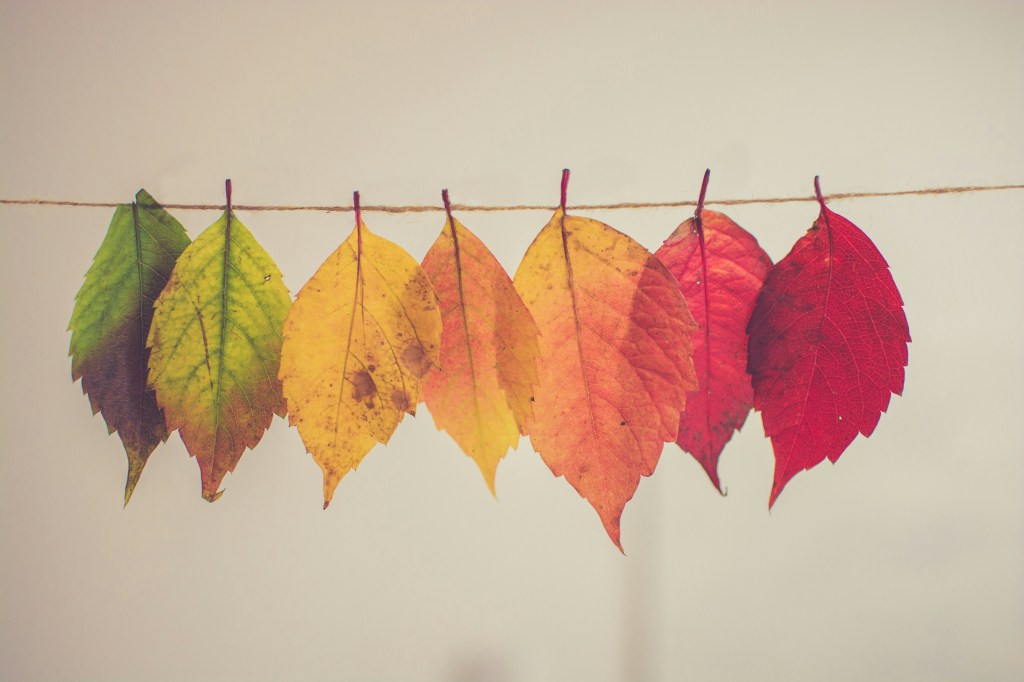
Autumn has officially arrived, with the leaves catching ablaze, the weather being wetter and windier, and the nights drawing in. Autumn is the transition between Summer and Winter. It is a fertile void of sorts. It’s a period of time between two places. It’s a time of change. Interestingly as we enter this changeable season, the word “overwhelm” seems to hang in the air around my orbit. There seems to be so much to do, so much change to manage, and not enough time, space or energy to cope. There is a feeling of overwhelm when contemplating the change underway. Maybe it’s nothing to do with the change in season, but it’s an interesting coincidence.
A graph of change
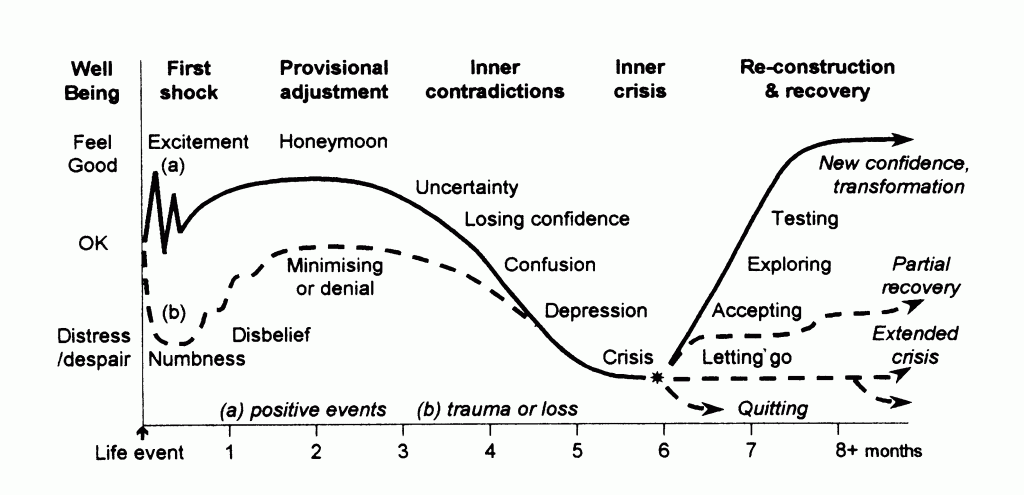
I was recently looking for some resources around managing and understanding change and came across this graph (devised by Adams, Hayes and Hopson in 1976). It plots the phases we might experience when faced with a major life event. The graph plots our possible experience with a positive event and a negative event (for example trauma and loss). What I found fascinating was that regardless of whether the change underway is negative or positive, we may all experience an “inner crisis” before hopefully recovering towards transformation. Whatever the change (be it an engagement or a redundancy) our psyche might be disrupted in similar ways. Change whatever it is, impacts us and represents a challenge to work through.
Change is tough.
Although change is inevitable and happening all the time (for example at a cellular level your body has changed since you started reading this piece), it is still a challenge for most of us to manage.
We have an inherent need for control in our lives. Writer Kahlil Gibran explains that “our anxiety does not come from thinking about the future, but from wanting to control it.”
Change brings us in touch with the unknown, causing an absence of control. A lack of control is replaced by anxiety. When faced with uncertainty, we can feel a sense of helplessness. Being unable to predict or control the outcomes is a perfect recipe for overwhelm.
A personal touch
This past year for me has been one of great change, thankfully all positive. I’ve moved house to an area not well known to me, I got back behind the wheel, I’ve made new friends, and my personal life has entered an exciting chapter (hurrah)!
What I noticed about all these twists and turns, is that the practical aspects of the changes I took in my stride, but when there was time to breath and rest, the emotional side kicked in. It was as if the changes happened while I wasn’t paying attention, and then afterwards everything caught up with me. I experienced episodes of anxiety, sometimes out of the blue or at night in bed. My heart racing, palms sweaty. Even though the changes were all underway and quite known to me, the processing of the psychological aspects were only just beginning. I also noticed my body did a lot of talking. I experienced a few nasty bugs and a randomly infected finger.
In accordance with the graph above, the honeymoon was definitely over for me. I was experiencing some serious personal wobbles (a loss of confidence and a fair amount of confusion). I felt like a sat nav trying to reconfigure its position before it can replan its route.
I thankfully was able, as the graph above details, to come through my wobbles to a far more solid and confident place. When we’re faced with a sense of overwhelm, what can we do to help ourselves?
How to manage
- Breathe!
Often when feeling overwhelmed, our breathing often goes out of whack. We begin to breath from our chest, shallow, short breaths. Becoming aware of our breath and breathing deeply from our bellies (engaging the diaphragm) is a great way of grounding ourselves. Also, if we breath out for longer than we breath in, we can engage our vagus nerve and reduce our anxiety.
- Get back some control.
Part of overwhelm is normally having too much on our plate at once. Protecting our time and space can help us find a sense of control. What is also key is to know what we can and can’t control. It’s important to know our limits and do what we can do to protect ourselves. Getting back some control can really help steady ourselves.
- “This too shall pass”.
The thing about change is not only is it inevitable but it is happening all the time. Like the weather, it can’t rain or be cloudy forever, eventually the skies will clear, and the sun will come out. It’s an old Persian saying that “this too shall pass”. Whatever we are experiencing in one moment will change as time progresses (the graph confirms this also).
- Focus on the short-term
When I was recently facing my feelings of overwhelm, I noticed in my panic I was overly fixating on the long term possible (negative) consequences of the changes currently happening. This was completely pointless and a total waste of energy and only added to my anxiety.
In truth none of us know how things will work out in the long term. We can only know the present and maybe a bit of the short term. The long term is full of uncertainty. So, it’s far better for us to focus on the here and now, what we can control and break tasks down into manageable chunks. If we focus on the present, the future should take care of itself, so to speak.
- Recall past challenges.
Remembering that we have coped and managed past difficult experiences can really help us feel reassured and confident that we can handle what is going on in the present. When feeling overwhelmed we often forget these past experiences and convince ourselves that we cannot cope.
- Find a new rhythm.
Change often provides us with the opportunity of doing things differently. We might be feeling overwhelmed as we struggle to adapt to the change. Accepting that we might need to find a new rhythm in our lives can gives us a chance to develop a new structure and routine. This should hopefully include some stress reducing activities such as exercise, meditation, or being in nature.
Conclusion
Change is inevitable and its very human to feel overwhelmed from time to time. The important thing is to pay attention to yourself and not get stuck in a spiral of panic and avoidance. And as the graph above suggests, there is a route out of the crisis towards transformation.
Studies have shown that those who resist change experience more pain and distress compared to those who embrace it. As philosopher Alan Watts recommends, “the only way to make sense out of change is to plunge into it, move with it, and join the dance.”
So, let’s find our new rhythm this season and enjoy the dance for all that it brings.
Photo by Chris Lawton on Unsplash
 Suzie Chick
Leave a comment