“It’s not the load that breaks you down, it’s the way you carry it.” Lou Holtz (former American football coach)
These past few weeks I’ve been slightly hobbling about, wincing with pain and discomfort. My hot water bottle has become my new best friend and my soft mattress, my nemesis. The muscles in the left side of my lower back were strained. It started as a slight niggle which I regrettably ignored and then it evolved into something which stopped me in my tracks. My body was clearly speaking. I was literally under strain.
The fact that this injury (of unknown origin) coincided with a week off work wasn’t lost on me. I clearly remember a wise college tutor telling me that there is a difference between holding and carrying when it comes to our work as therapists. I sensed my back was telling me I had been doing too much carrying, and not enough holding. As the quote above explains the way you carry the load can be just as important as the load itself.
Stress and the body
Ironically as this was going on for me physically, I was delving into Gabor Mate’s “When the body says no”. This book centres around the mind-body link especially the impact of psychological stress on the body. It’s a fantastic book, I highly recommend. Gabor talks through many fascinating case studies to prove a main thesis, when we experience stress in our lives and don’t do anything directly about it, the stress will be stored and expressed in our bodies. If we don’t say “no” verbally, our bodies will do it for us. My back was feeling the stress that I may have been ignoring.
Unfortunately, around this time, I had a one-off sudden experience of feeling unsafe and unnerved in my personal life. This event left me feeling physically under threat (even though logically I wasn’t). My body was in a state of heightened anxiety (hyper aroused) and soon after I calmed down, my back strain became worse. The stress I had experienced from the incident was clearly being stored (as inflammation) in my back muscles.
Gabor explains that “stress is a response to a perception of threat”. Research has shown that tissues and organs in the body become more vulnerable to inflammation (through dilation of blood vessels and swelling) during and after periods perceived as threatening. Bingo. My back was holding my stress, both work and personal.
Healing
My back was talking, (pretty loudly may I say), and so I had to listen.
I was forced to slow down. Physically, I struggled to walk very far, and had to stop regularly to stretch my back. Simple tasks such as cutting my toenails became impossible, and dressing was quite a long-winded affair. Sleep was incredibly difficult, lying still caused my back to stiffen up and so regular night wanderings were needed to keep my back warm and active. I had to factor in extra time in my day to accommodate my mobility issues. Tasks that could wait, were delayed. I had to accommodate my body and its needs so that it could rest and heal.
To help me understand the possible reasons for my physical pain, I leaned on my understanding of somatics. This being an approach to mend the mind/body connection, where we listen to our bodies as internal signals relating to wider psychological issues. Somatic psychotherapy addresses the physical effects of trauma, anxiety and other mental health issues through exploring symptoms such as muscle tension, digestive problems and chronic pain.
I had to ask for help. Despite my role as a therapist, I can be pretty poor at this (not good I know). I pride myself on my independence (a legacy of being a parentified child). But with this pain and discomfort, I was forced to confront my vulnerability head on. Asking for help was not a sign of weakness but a mark of courage and maturity. We all need help sometimes. I drew on the support around me. I no longer tried to grimace through the pain. I let others take some of the load. The weight I carried was becoming more manageable.
I had to befriend my pain. To not fight it, but care and listen. To see my pain as a form of important communication and to be curious about it. To not pretend it wasn’t there. I conducted regular body scans especially around my lower back. When my back needed to be stretched in a certain way, I honoured its need. Gentle movement and holding helped my back stay warm and supple.
Thankfully as I write this, I have almost healed. I am still taking things slow and gentle. Given its coming to the end of the year, my slower pace is allowing me time to reflect on what has been and what is to come.
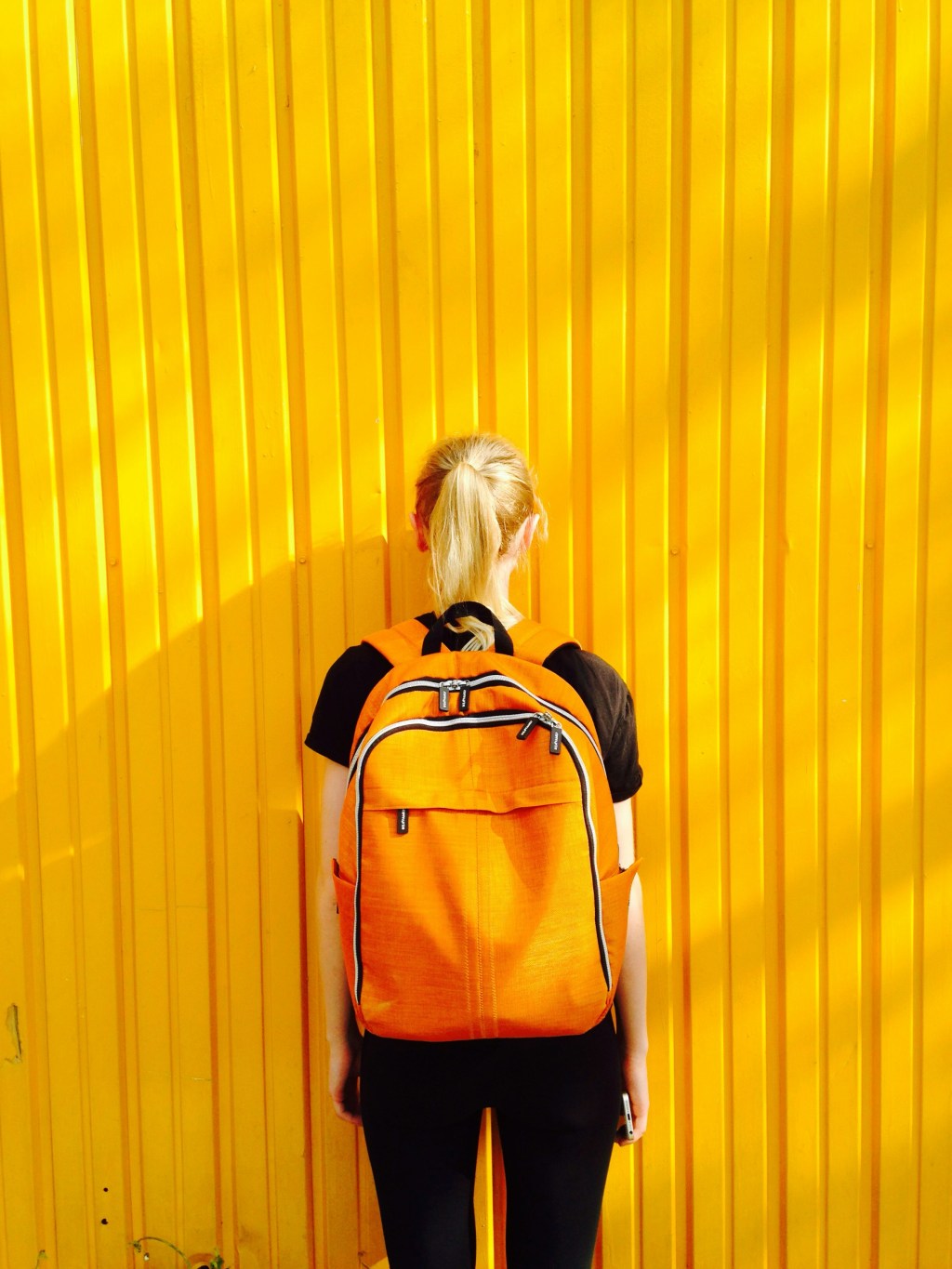
And so, I’d like to invite you to remove your own emotional rucksack this festive season. Take the weight off, release the strain and breath.
Photo by David Pisnoy on Unsplash
 Suzie Chick
Leave a comment