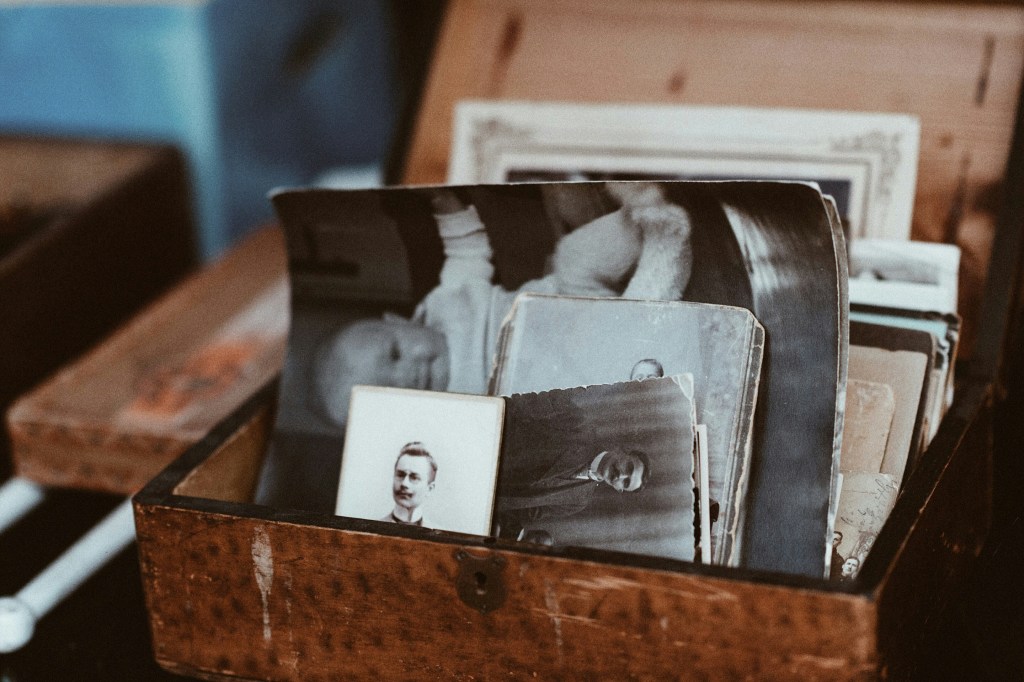
“If you want the present to be different from the past, study the past” Baruch Spinoza (Dutch philosopher)
January has just been and gone, the first month of the year, named after the Roman god Janus. Janus is depicted with two heads, one which looks forward into the year and the other looking into the past. Us therapists are pretty obsessed with the past when it comes to our work and understandably, I’ve sometimes had clients wonder why. It’s a great question so let’s have a go at answering it.
Aids understanding
First and foremost, understanding our past gives us a wealth of knowledge about ourselves and who we are in the present.
Our past, particularly our early childhood, acts as the building blocks for who we become. Our family is the first group we ever belong to, our caregivers are our first relationship, our relationship with food is quickly established, our attachment style etc. These milestones act as blueprints which we carry forward into our adult lives. We learn so much from these early experiences, sometimes too young to remember cognitively, but the lessons are learnt more unconsciously and stored in the body.
In therapy we gain an understanding of these experiences so that we can make more sense of ourselves and have the opportunity to change. As long as our ways of being (and the reasons for them) remain in the unconscious, we’re not fully in control to make such changes.
For example, if a mother experienced trauma during her pregnancy/ childbirth (thereby meaning her child also experienced the trauma) it would be understandable that that trauma is experienced later in the child’s life, probably as high anxiety, say in their attachment style or core beliefs about themselves. If we don’t explore someone’s birth story, we can sometimes miss out on some absolute gold which might help us understand someone’s current situation.
Aids compassion and empathy
Just as much as knowledge about the past can help us understand ourselves better, it can also help us develop compassion and empathy towards others in our lives.
A big example of this are our parents. It can be incredibly useful to gain information about how our parents were brought up, the circumstances of their upbringing and early life. Our parents, unless they’ve done some personal work on themselves (e.g., attended therapy) are most likely only equipped with the parenting tools handed down to them by their own parents. Understanding the limitations of this ‘parenting toolbox’ can help us find empathy and compassion when considering our parents and their behaviour towards us and others. This doesn’t mean our potential feelings of anger or frustration are not valid, but they can co-exist against the backdrop of knowledge and understanding which we have developed about why our caregivers are the way they are.
It’s not personal.
Gaining an understanding of our past (and the past of those close to us) can help us stop feeling that everything that is happening is about us.
Transgenerational trauma is a fantastic example. Through exploration we may learn that some of our behaviours/ways of being aren’t ours but originate back through the generations of our family. Uncovering a trauma in our family tree (say a sudden death) can unearth a wealth of understanding as to why our families operate in a certain way. The trauma gets passed down in different ways including at the cellular level. Later generations, without this knowledge of their family’s past, can experience the symptoms of trauma without having it experienced it directly themselves.
Break the cycle.
A key notion in therapy is that until we make parts of our unconscious conscious, we will continue to act upon them without having any knowledge or understanding as to what or why we do/say/feel the way we do. Until we do the work (in therapy) we can find ourselves quite lost and confused. We often can get caught in repeating the same scenario in our lives (just in different settings and characters), and unfortunately often getting the same negative outcome. These repeated patterns lay unknown in our unconscious until we decide to understand our past.
For example, we might be trying to find a romantic partner, but every time we find something serious, it somehow goes wrong, and we find ourselves back where we started. Exploring our past in this example may uncover that we’ve develop a defence against intimacy as our very first loving relationships (i.e., with our caregivers) were full of neglect and disappointment. And so, as adults when we find ourselves on the cusp of a new loving relationship, the defence kicks in to protect ourselves from potential heartache and as a result often causes the budding romance to come to an abrupt end.
Through understanding our past, we can get to know our defences and how they might protect and harm us in equal measure. Often our defences have been developed from childhood for very good reason but now as adults they trip us up and restrict our lives. Becoming conscious of our defences means we can know when and how we might be triggered and have a choice as to what we want to do. We can’t change the past, but by getting to know it we can have greater choice and control about our lives in the present.
I hope my little exploration has helped clarify why us therapists get so obsessed about our clients past. But I should explain that it is always the client who decides which direction their therapy heads in. I have had clients who don’t want to explore their childhoods, family trees etc. and that’s absolutely fine. Obviously missing out on this kind of exploration will alter the therapy but it must always be the client who has autonomy. I for one find the past fascinating and so useful in my work and as American writer, William Faulkner explains “The past is never dead. It’s not even past.”
Photo by Roman Kraft on Unsplash
 Suzie Chick
Leave a comment