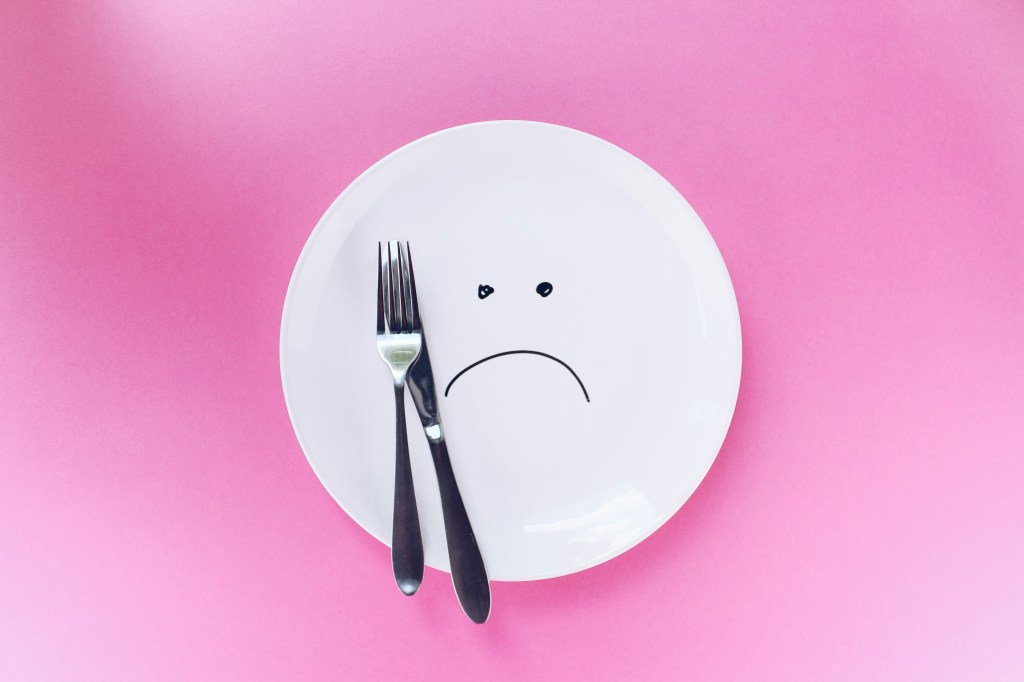
“Eating patterns are directly connected with emotional issues arising both from childhood and from current stresses” Gabor Mate
Our relationship with food begins from the very start of our life. Afterall we can’t survive without nourishment. Food quickly becomes entwinned with our caregivers and early life experiences. Psychotherapist, Julia Samuel describes food as the one of the first ways we receive love, comfort and safety and so it makes sense that we might turn to it in times of emotional need.
So, I thought for this and next month I’d take a little bite into a massive topic about our relationship with food, why we sometimes turn to it for comfort and how we can manage these potentially unhealthy habits.
Disordered eating not an eating disorder
Firstly, let’s properly define emotional (or stress) eating. In simple terms emotional eating is when we turn to food not to satisfy physical hunger but to comfort emotional distress. Emotional eating can include turning to food out of boredom, craving certain foods when you’re feeling down, or feeling hungry after a stressful event (such a row with your partner).
Emotional eating is not classed as an eating disorder (like anorexia or binge eating), but it can be a sign of disordered eating.
Attachment therapist, Linda Cundy describes how food becomes part of our identity and mediates our close relationships. Cundy explains that it is when these relationships become threatened that our relationship with food becomes disordered.
As well as emotional eating, disordered eating can include labelling foods as “good” or “bad”, having obsessive thoughts about eating which interfere with day-to-day life or being very rigid with food choices.
Hunger- physical or emotional?
The NHS website page on emotional eating describes the differences between emotional and physical hunger.
Emotional hunger doesn’t derive from a rumbling tummy but tends to start with a craving for something specific to eat. Physical hunger comes on gradually, you are able to wait a little before eating, you can eat a variety of foods (not just fixated on certain foods) and are able to stop when you feel full. Whereas emotional eating comes on suddenly and has to be satisfied very quickly, by certain foods and this type of hunger is not resolved with a full stomach.
The causes
The exact causes for emotional eating can be varied and complex and differ from person to person. One thing we are sure about is that it is not physical hunger which causes it but an experience of something difficult or stressful, which must be soothed with food.
Learned behaviour.
Eating to sooth or comfort can be learned from childhood. For example, if a child has a difficult day at school and is upset and their parents’ way of responding is to give the child a treat, then over time the child learns that food is a way of making them feel better about their difficult feelings. As an adult this may result in behaviours such as grabbing a box of cookies and ice cream after a tough day at work instead of sitting with and tolerating the difficult feelings. These associations are deep seated from childhood and can take some effort to make conscious and break in adulthood.
Physiological impact
Initially when under stress, our bodies go into fight/flight mode and adrenaline is produced in response which puts our appetite on hold. But if the stress continues, cortisol is also then produced (a hormone that helps the body protect itself) which then increases our motivation to eat.
Essentially the body is getting ready to fight or flee (in response to the stress) and so wants high sugar, high fat and salty foods to help mobilise it against threat. Of course, the majority of our stress experiences in modern times are not life or death and so don’t often require such drastic action. But our bodies and brains don’t immediately recognise that and so rely on primal ways of being for protection and survival.
If we get stuck in stress, our cortisol levels remain high and so does our appetite. British research in 2007 showed that people who responded to stress with high cortisol levels were more likely to snack than people with lower levels of cortisol.
Literal comfort food
Eating produces the feel-good hormone dopamine, so we are soothed and made to feel better by our consumption. So, in a stressful situation, eating helps calm our feelings. Sugary and fatty foods seem to have the most impact on calming ourselves, they are the literal comfort food.
The cycle
Over time we learn to associate these foods with comfort and hence a cycle begins of stress and unhealthy consumption. The more food is used to manage difficult emotions, the more entrenched (and unconscious) the habit becomes. Add in the shame we may feel after eating these unhealthy foods (not out of hunger but out of craving). This shame makes us feel worse and so we turn towards the comfort food to alleviate our negative feelings. And the cycle continues.
So hopefully you can see that emotional eating is nothing to do with being greedy or gluttonous but is instead a perfectly natural reaction to stress. There are obvious negative outcomes of turning to food as a mean to self-regulate and comfort and so next month I’ll discuss the ways in which we can help ourselves break out of the emotional eating cycle. See you then!
Photo by Thought Catalog on Unsplash
 Suzie Chick
Leave a comment