
“What technology makes easy is not always what nurtures the human spirit.” Sherry Turkle
Over the past year or so, the therapy world has been debating (and at times fretting) over the advance of technology, especially Artificial Intelligence (AI), and its potential impact on counselling and psychotherapy. It’s a dialogue that is absolutely necessary in my opinion and each practitioner needs to decide how they want to respond whilst remaining within their competence and their ethical and professional boundaries.
Alongside the debate in my “industry”, I’ve also noticed a theme emerging in some of my client work. These being reports of feeling disconnected and empty, alongside an aching loneliness. This emptiness feels important, and I wonder if our use of technology has been a major contribution. So, I thought I’d explore this topic, although I am aware that this is a massive subject and one, I can only briefly skim the surface of here.
The data
In May 2023, the US Surgeon General, Dr Vivek Murthy declared loneliness as an epidemic, alongside the World Health Organisation research showing that loneliness causes a similar impact on our health as smoking 15 cigarettes a day. Loneliness is linked to an estimated 100 deaths every hour, more than 871 000 deaths annually.
We are wired for connection and belonging (as a means for survival), and so when this isn’t happening in our lives, our health suffers greatly. If we don’t feel connected to others, our nervous system goes into threat mode, we fall out of regulation in our bodies, and this causes our immune system to be compromised. Long term experiences of this can contribute towards chronic conditions (particularly around aspects of inflammation). In older adults, loneliness is associated with an increased risk of developing dementia and coronary artery disease or stroke.
The causes
Throughout our lives we may experience episodes of loneliness often connected with feelings of loss and change. For example, when someone close to us dies, or if we change jobs, or move to a new area without a supportive community around us.
A recent report from The Economist described how the negative feeling of loneliness arises out of a discrepancy between the actual social interaction and what we had hoped for. I have experienced this at times, where I hoped to feel seen and heard by others but when my “bids for connection” were unsuccessful I was left feeling unsatisfied and empty. Often upon reflection I realised there was a lack of presence in the interaction, as if we were both a bit distracted by something. I wonder if technology could be the tempting culprit here.
Technology has allowed us a sense of connecting with more people than ever before and yet these interactions seem to be shallower and fleeting than ones created in real life.
“Counterfeit Connection”
I very much adhere to the notion that “it’s the quality not quantity” when it comes to our relationships with others. As relationship therapist, Esther Perel described the dilemma recently “I have thousands of friends online, but no one to feed my cat.” If our connections with others are only surface level, we can often be left feeling lonely and empty. This is what Brene Brown describes as “counterfeit connection”. In Brene’s conversation with Esther, AI is described as “Artificial Intimacy” and they both agree that our hyper connectivity masks a sense of modern loneliness. Esther concludes that this loneliness is not about being physically alone, but it’s about feeling misunderstood, unseen, rejected and ostracised.

As of 2022, more than half of the world’s population uses social media, spending an average of 147 minutes each day. But despite this, 71% of heavy social media users report feelings of loneliness. It’s clear that this online sense of connection is not fulfilling our innate need for relationship.
A recent national survey in the US, showed that almost three quarters (73%) of respondents believed technology as a contributor to feeling lonely. Interestingly after citing not enough time with friends and family, being overworked or experiencing mental health issues, the next cause cited was living in a society too much focused on the individual (58%) (something social media has a hand in exacerbating).
The advent of AI and its incredibly fast infiltration into our lives, I feel will only add to our loneliness epidemic, adding kindling to the fire already started by social media. I am not going to get into this debate here and now (its lengthy and detailed), but I would advise to use AI with caution. It’s a great tool, but it’s just that, a tool not a replacement for human-to-human connection.
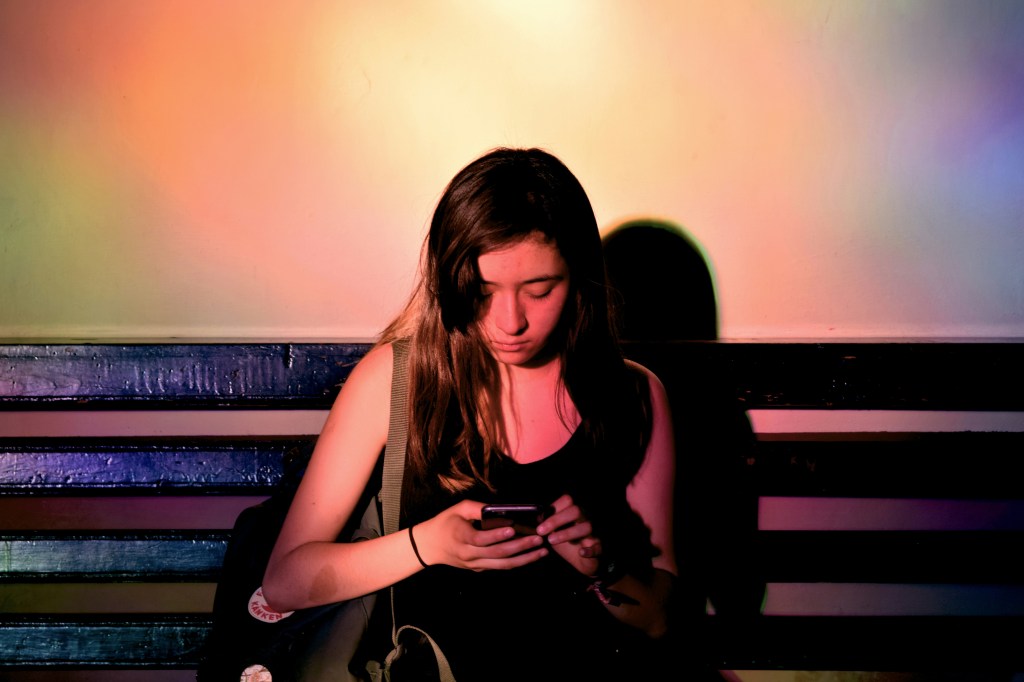
Francis Weller, psychotherapist and soul worker, wonders if our loss of connection with the natural world is a factor in our feelings of loneliness and that we have an “attachment disorder” to the world we live in. I would certainly add that technology has helped us with that loss of connection. We remain huddled over our phones or laptops fixated on those blue screens, not noticing the world around us in all its wild variety.
I would also like to throw a curve ball into this discussion as recent research shows that loneliness effects people of all ages and isn’t just a Western world issue, some research has found that some of the loneliest countries are in Africa (main factors being scarce resources and poor infrastructure). So, it’s not all down to technology or living in the developed world. But there can be no denying that our ever-increasing reliance on technology is having an impact of how we feel about ourselves and our relationships with others. As the quote above from American sociologist, Sherry Turkle describes, the nurturing of the human spirit is at risk of being neglected through technology.
At this stage of my thinking, I don’t have any magic wands (alas) to resolve our feelings of disconnection and loneliness. But if we can try to remain conscious and aware of our use of technology and how it makes us feel then that’s a good start. My hunch is that we are in the very early stages of our use of these technologies and it’s going to take some time (with some failings and missteps along the way) before we can develop a heathy relationship which doesn’t compromise our need for high quality connection and belonging.
Photo by Karla Rivera on Unsplash
Photo by Kristina Tripkovic on Unsplash
 Suzie Chick
Leave a comment