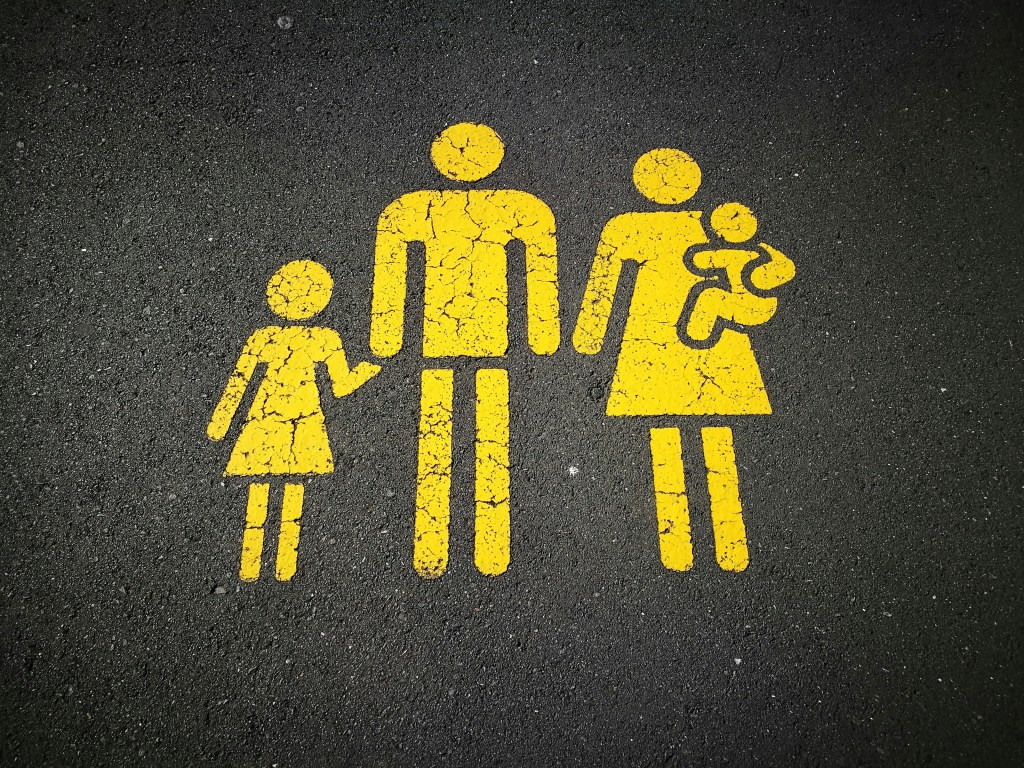
“All happy families are alike; each unhappy family is unhappy in its own way.” Leo Tolstoy from his novel “Anna Karenina
I was recently provided with some news that a relative had died almost a year ago. This was the first myself and my immediate family had heard of it. The news was delivered to me in a factual, non-emotional manner, with little room for discussion. I was left feeling sad and quite confused. We only found this out now, through a random (nosey) google search, and this relative died many months ago. We had no idea, weren’t invited to the funeral etc. This situation is pretty strange! What is going on you might ask? Family estrangement is the answer.
The what?
Just to clarify family estrangement is when at least one family member intentionally distances themselves from at least one other family member because of a perceived or actual negative relationship. Estrangements aren’t necessarily permanent and are often progressive in nature.
Doing a quick google, I notice lots of recent articles on the topic. There are even 15 groups on Meet Up to support those dealing with family estrangement and the isolation it can bring. In fact, my research into this topic has yielded some much food for thought, I’ve decided to break this piece into two parts; one now, and the second to come out in September.
According to Psychology Today, at least one in four people will experience family estrangement. There seems to be a sense amongst the therapeutic community that parent/child estrangements are on the rise in the Western world. There appears to be something developing in our culture which is making estrangements more acceptable and possible (I’ll discuss possible reasons for the increase in the second part of this piece).
A recent study has shown that most estrangements between a parent and an adult child are initiated by the child. A survey of mothers from 65 to 75 years old with at least two living adult children found that about 11 percent were estranged from a child. Of those, 62 percent reported contact less than once a month with at least one child, and the remaining 38 percent reported zero contact in the past year.
The why?
My research suggests the reasons for family estrangement can be pretty varied, but normally fall into the following camps:
- Abusive relationships – Victims of abuse and/or toxic family relationships often (and understandably) put strong boundaries around the perpetrators to protect themselves from further harm. A biological relationship does not guarantee love and support and so estrangement can be a necessary step for emotional and physical safety.
- Differing values and beliefs – Estrangement due to clashes in values and beliefs is more common as we become more split as a society, especially politically. Matters such as Brexit and the rise of right-wing politics have divided some families to the point where the relationships are compromised. For example, a recent UK study found that one in 10 people have fallen out with a relative over Brexit.
- Mismatched expectations about family roles– This can include where parents appear to favour one child over others, or how adult siblings respond to aging parents needing care. The pain and disappointment over such matters can be too much to bear and so estrangement is used as a form of avoidance.
- Divorce – In some cases, family members align with one side of a parent’s divorce especially regarding matters of infidelity and new partners. Blended families can cause conflict over what is perceived as scarce resources of love and finances.
- Addiction and mental health issues – When a family member is suffering especially from issues of addiction, estrangement is sometimes the only option to protect others from the related destructive behaviours. I have seen this in my work, especially around alcohol addiction in a parent, where the adult child has spent their life trying to manage their parent often ending up colluding with them. The adult child often comes to the conclusion that until the parent gets help and begins recovery, cutting off the existing relationship is the only way to not get caught up in the addiction.
- Money – Conflict over financial assets, inheritance etc can be a reason for estrangement. Arguments over money can bring hidden or past resentments to the surface and left unresolved can result in a breakdown in the relationship.
- Poor communication – Conflicts left unresolved can cause tensions to grow deeper over time, and if either side refuses to acknowledge or engage with the issue, then estrangement can be an option.
Interestingly research conducted by Dr Lucy Blake of Cambridge University reveals that sometimes the reason for family estrangement isn’t known by some of the parties involved. I can understand this especially when it comes to toxic family members. Often others distance themselves in stages until estrangement occurs without the family member noticing. This is particularly relevant when it comes to highly narcissistic family members, who given their personality, will struggle to understand estrangement or take any accountability for it.
The how?
So how does it feel when you’re experiencing family estrangement?
There is of course feelings of loss and grief, and sometimes relief (especially if the estrangement regards abuse). Anger and resentment are common also, especially If the situation appears unfair or there has been a break of trust.
Dr Rebecca Bland, who founded the charity, Stand Alone, after she became estranged from her parents, believes there are five stages which might be experienced in this painful process. These stages are:
- Disassociation – the first stage of estrangement where feelings are so difficult to experience, a protective strategy (like with trauma) comes into play. The feelings are too overwhelming to fully experience. Bland likens it to the dynamics of toxic families who “don’t feel, don’t speak and don’t trust.”
- Anger and sadness – after disassociation come the experience of feelings, primarily anger which often covers a deep sadness.
- Letting go of what we didn’t have – Once the difficult feelings have been processed from stage two, then we can come to a place of acceptance; knowing what we had and didn’t have. Dr Bland explains that “we can work with ourselves to realise that the deficit of the family we needed wasn’t related to our worthiness of love or acceptance.”
- Feeling strength – this stage involves understanding the qualities we have developed through our family experiences including empathy, sensitivity, resilience and courage. Our experience has influenced our way of being in the world and this stage is about recognising the positives of this.
- Peace – the final stage is not worlds away from the first stage, but instead of feelings being defended against, it is more that the feelings have been processed and no longer hinder our well-being. We are essentially at peace with the situation. We accept and stop trying to make things different.
As you can probably tell from my discussion above, there is lots to uncover when it comes to family estrangement. I feel like I have only scraped the surface. So a bit like estrangement itself, am splitting my exploration into two and intend to go further in depth in my later piece (due out in early September). To be continued….
Photo by Sandy Millar on Unsplash

 Suzie Chick
Leave a comment