The idea that what goes on in our physical bodies is connected to how we feel, think and behave is not a new concept.
This connection becomes apparent when we’re considering experiences of high stress and anxiety. In therapy we often talk about “flight/flight mode” or feeling hyper-aroused when it comes to feeling under threat and the natural reaction of our bodies.
Knowing how our nervous system behaves in times of calm (regulation) and unease (dysregulation) can provide much needed understanding and a sense of agency. For example, when feeling under threat, our bodies shift gear from the parasympathetic nervous state (rest and digest) to the sympathetic nervous system (fight/flight) causing symptoms such as feeling hot, increased heart rate and a need to go to the toilet. Our bodies are literally getting ready for action, diverting blood and energy to the parts that might need it the most.
Polyvagal theory
Dr Stephen Porges, an American psychologist, pioneered Polyvagal Theory in 1990s. This theory links together our autonomic nervous system, emotions, and social behaviour.
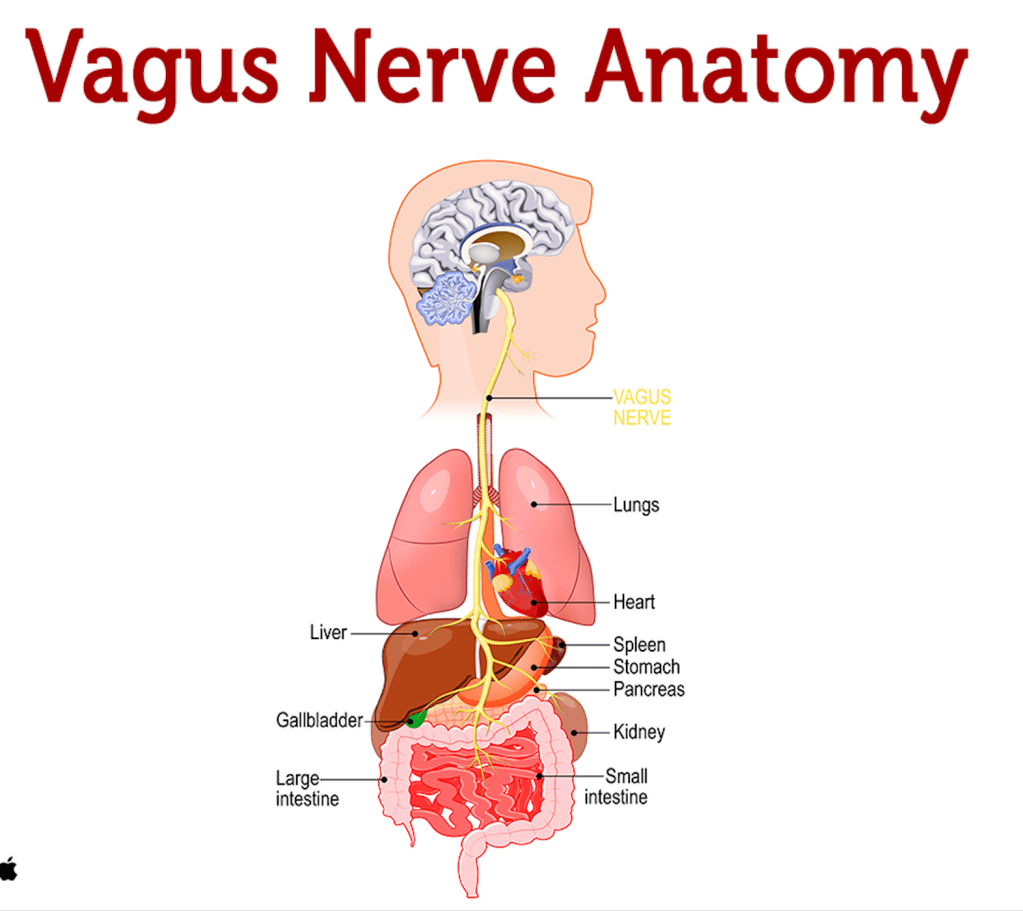
It proposes that the vagus nerve (the longest nerve in the body which connects our brain to the rest of our body) plays a crucial role in regulating our sense of safety or threat, and that our physiological state influences our ability to engage in social behaviour and emotional regulation.
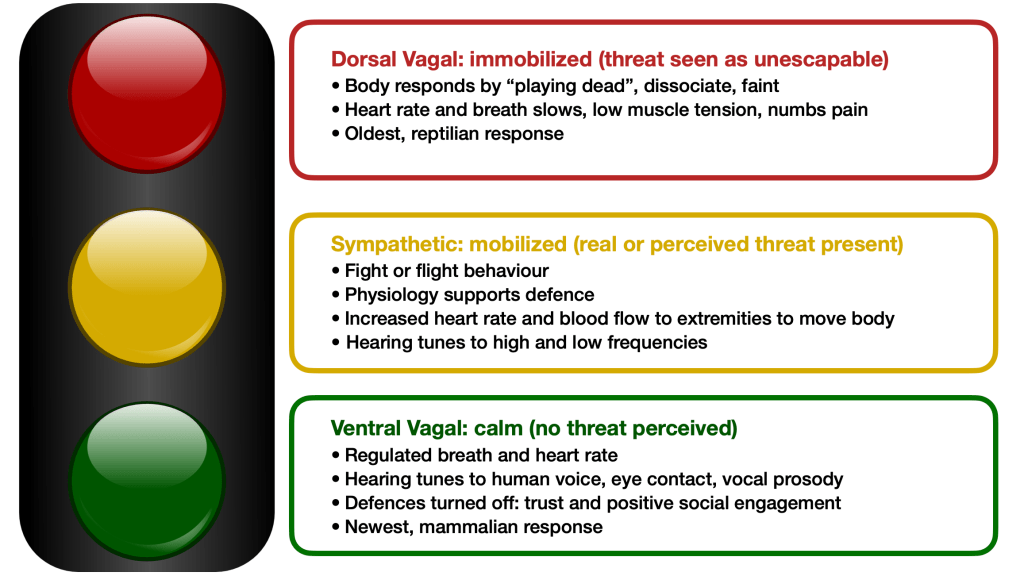
Below is simple diagram to explain polyvagal theory through a traffic light system.
- At the green light, our bodies are calm and regulated (the ventral vagus nervous system is activated here).
- Then when we feel under threat, we go into amber mode where our bodies get ready to fight or flee (flight), this is where the sympathetic nervous system is activated.
- And then finally if the threat persists and we are unable to fight or run away, we may go into red mode (stop) where we essentially freeze and play dead. This stage is where the older, more primitive part of the vagus nerve, called the dorsal vagal is activated.
In terms of what we might feel at each of these stages, the diagram below is good summary.
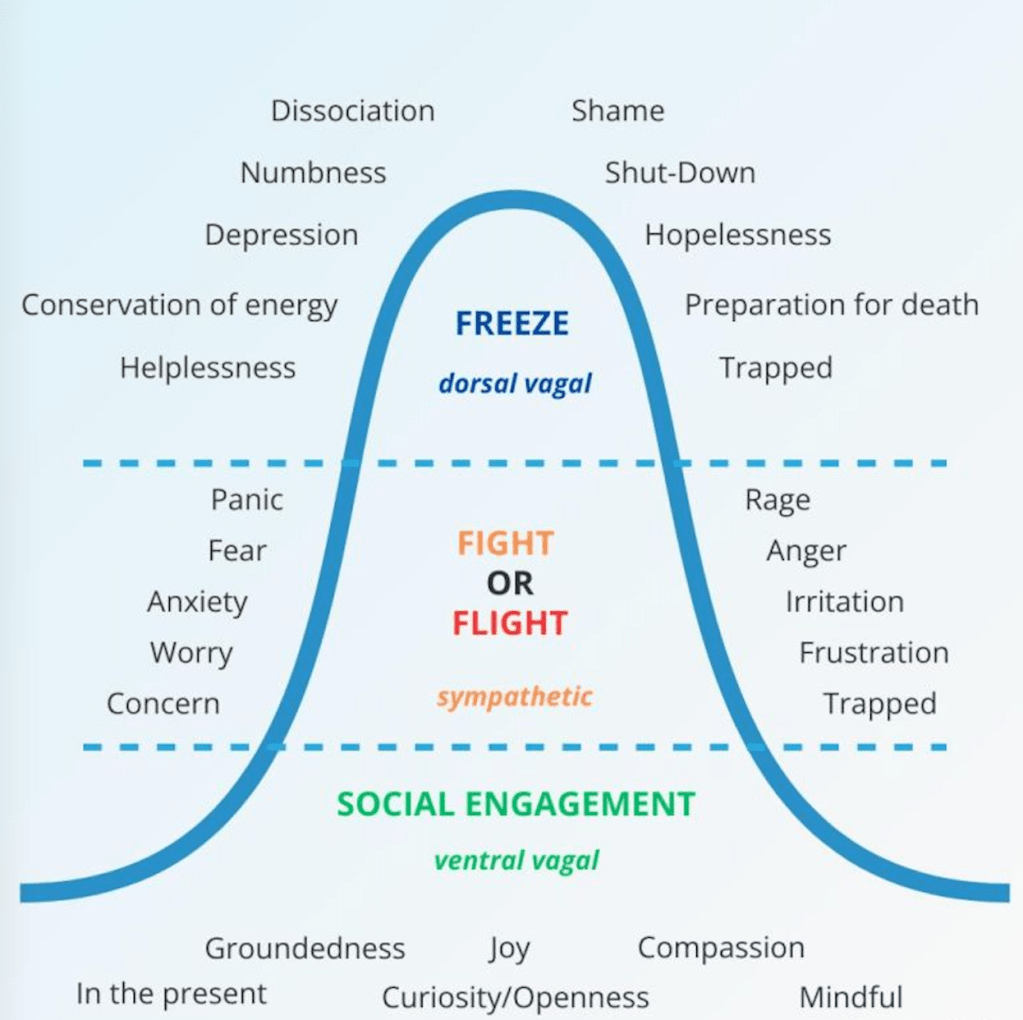
None of these stages (green, amber and red) are wrong, they are just how our bodies naturally response to threat.
However, problems can occur is if we continually get stuck on one of the lights, especially red or amber and struggle to get back into green, safety mode. So how can we get back into green mode (i.e., stimulate the ventral vagus nervous system)?
Breathe!
Becoming aware and calming our breathing is the main quick fix to switching back into green mode. When we’re dysregulated, our breathing steps out of rhythm and so taking long deep breaths can really help.
Also breathing out longer than you breath in allows the parasympathetic nervous system to be engaged. The common technique to use is called the 4- 7-8 breath (breath in for four seconds, hold for seven, breath out for eight). I find the timing a bit tricky for me to achieve and so I tweak it to suit my own breathing pace, making sure I am still breathing out longer than I breath in.
Chill out or warm up.
If you’re in amber mode (fight/flight) then you’re likely to being feeling pretty warm so a good way of getting back to green, is to cool your body temperature down. Examples such as a cold flannel on the back of your neck or dipping your feet into cold water can help quicken the cooling.
Likewise, if you’re in red mode (dorsal vagal) then you might be feeling quite cold and shivery. Blood has rushed from places such as your arms or legs to protect your vital organs (such is the level of threat you’re experiencing), hence the coldness sensation. So, warming your body up (be it through movement or maybe a hot water bottle) can help bring you back into regulation.
Other top tips
Through my research and work, I’ve come across these other tips to help bring us back into green mode:
- Look up. When in red or amber mode, our pupils’ contract, so just the simple move of looking up and relaxing and broadening our gaze can help bring some calm.
- Humming, singing or even gargling water can help stimulate the vagus nerve in your throat.
- Find a calm buddy. We are social animals and are able to co regulate with other people. If we’re feeling out of green mode, then finding someone who is in green mode can help us regulate. This often happens in therapy. A client arrives dysregulated at the start of the session. The therapist is calm and regulated, showing this through such things as their body posture, the pace of their breathing and the tone of their voice. And as the session progresses the client calms down also, they co-regulate.
- Tapping – Bilateral activation (where the left and right hemispheres of the brain are activated in quick secession) dampens down our threat response. Tapping our body with our hands/fingers can provide bilateral stimulation. There are numerous different ways to do this, including slowing tapping our knees, one knee then the other or another technique is called the butterfly hug. This involves interlocking your hands (crossed) (palms up) with your thumbs and then placing your hands on your chest and slowly tapping your collarbone, one hand at a time.
Polyvagal Theory helps us understand what is happening to us internally when we feel unsafe. It provides a simple structure as to how our bodies naturally respond to threat and how in turn this can affect our feelings, thoughts and behaviours.
Understanding that what is happening is perfectly normal, can help reduce the stress we are already feeling in the moment. And most importantly the theory for me gives us a clear path as to how to get the ventral vagus nervous system back online (i.e., green mode) so that we feel calm and regulated.
Photo by Andrew Teoh on Unsplash
 Suzie Chick
Leave a comment